
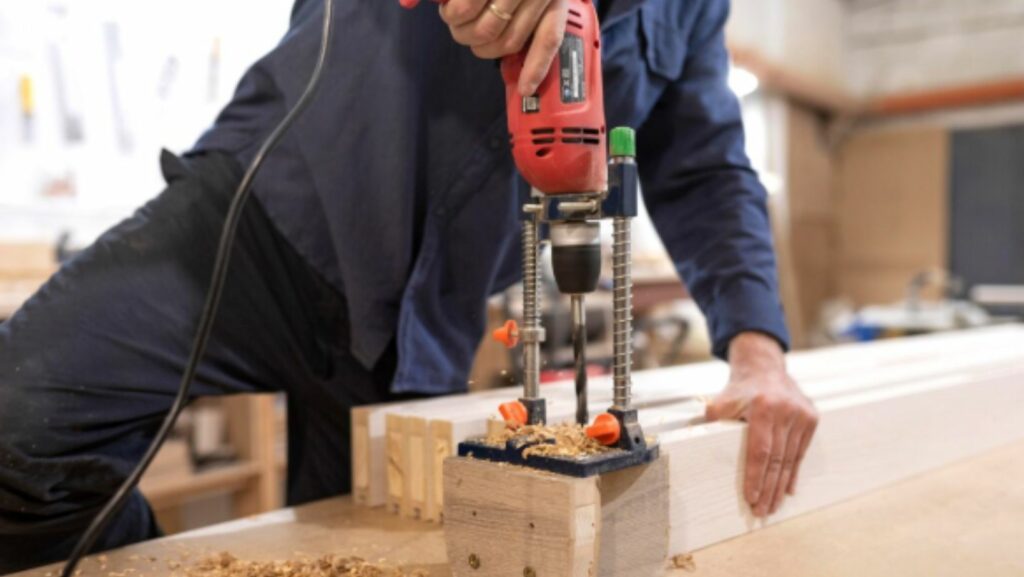
When you step into a tool shop, you will see rows of drills, each with different specifications and numbers. And for a trusted name like Makita, the choice is vast.
The wrong drill can slow your work or fail on the job, while the right one feels like a part of your arm. So to make the right choice, you must focus on these six key factors. They will guide you to the Makita drill that fits your hands, your tasks, and your future projects.
- Your Needs
Before looking for the Makita drill, you must know your needs. Are you driving screws into soft wood, or do you need it for making big holes through tough stuff? Makita makes three main types. The first one is a drill driver, which is your basic, go-to tool for screws and small holes. The second is a hammer drill that adds a punch action for light masonry like brick or block. And the third one is a rotary hammer. It is for serious work in concrete and stone. You must pick the type that matches your specific needs.
- Battery
Your drill will only work well if it has a good power source. The battery is the heart of a cordless drill. Makita uses its LXT 18V platform, which is known for good life and power. When selecting a drill for your needs, you must look at the Amp-hours (Ah). A 5.0Ah battery lasts much longer than a 2.0Ah battery. But for complex jobs, you need a high Ah rating or a spare battery. However, if you own other Makita LXT tools, you can share the batteries. This saves cash and clutter.
- Motor Type
Makita offers two main kinds of motors, brushed and brushless. Brushed motors are good, reliable, and cost less. They work fine for most home tasks. On the other hand, brushless motors are the top pick. They are more efficient, so they run cooler and longer on a charge. These motors also have more power and last longer with less wear. For professionals or those who use their drill a lot, the brushless model is worth the extra cost. It is an investment in speed and power.
- Torque and Speed Control
Torque is twist force of the drill. More torque means you can drive bigger screws or drill hard stuff with no stall. You must look for a drill with a high torque number if you do heavy work.
Moreover, you must consider the control. A good drill has a clutch with many settings. This lets you set the exact torque, so you don’t strip a screw or sink it too deep. It also allows you to change the speed as you need. You can keep the slow speed to start a hole and the high speed to drill fast.
- Chuck Size and Type
The chuck is the jaws of the drill that hold the bit. Its size matters a lot. A 13mm or 1/2 inch chuck holds bigger bits than a 10mm or 3/8 inch. For most all-around work, the 13mm chuck size is best.
In addition to Chuck’s size, you must look at its type. A keyless chuck lets you change bits fast by hand with no key. On the other hand, a keyed chuck needs a tool to tighten it, which can be safer for heavy use, but it is slow.